
Momentum Mori
On the most dangerous lead in football, and on being two goals down in the rest of your life.

Announcers say it the instant a team goes two-nil up, usually in that knowing voice, like they're dispensing ancient wisdom. “Two-nil is the most dangerous lead in football.”
Only that it isn't. It's one of the safest. Teams that go two-nil up win about nine times in ten, and throw the lead away so rarely that it happens less often than an own goal. As a claim about who wins, "the most dangerous lead" isn't just slightly wrong.
So why do intelligent people, who have watched thousands of matches and could check the numbers in a minute, keep saying it anyway? Nobody clings that hard to something merely false. They cling to something that feels real.
Two-nil makes the leading team comfortable. Sometimes complacent. The game starts to feel handled.
Then the other side scores. Two-one.
And then you can watch it happen to twenty-two people in real time. The team that was comfortable feels the first scent of doubt, and the oh-shit feeling arrives an instant before the thought does. And at the exact same instant, the opposite thing happens at the other end of the field. Hope, where a minute ago there was none. Then belief. Then behind the belief, there is energy you can hear and feel in the crowd before you can see it in the players.
One goal with two teams experiencing opposite realities.
Consider what didn't change. The team in front is still the favorite. The likeliest result is still their victory. On paper, almost nothing happened. But the game the players are in is no longer the game the scoreboard describes: one side is suddenly imagining defeat, the other is suddenly imagining possibility.
And what each side does next comes from the imagining, not the scoreboard. The goal changes how both teams play long before it changes who’s winning.
Reality changes twice: first in meaning, then in fact.
Football is simply a place where you can watch this happen, because the scoreboard doesn’t lie. Life keeps a scoreboard too (God this sounds cheesy). It just hides it better. There's no number in the corner of the screen, so the score in the part of your life that counts can drift for weeks before you read it. Most days, in the part you don't bring up at dinner, you're a goal or two down and doing a quiet, expert job of not looking.
The best coaching I ever got on being down came from my college classics professor, Owen Kramer, in my freshman year, when I was seventeen and suffering from some kind of freshman depression, probably caused by some combination of homesickness and existential angst. I went to his office in search of advice.
For what it's worth, Owen seemed to own only one outfit: a white button-down and khaki pants with a slight bell. In stark contrast with my depressive state, I recall perhaps the funniest moment of my college life. In his class one day, my friend Andy Dorsey passed me an exquisite cartoonish drawing of Owen standing in a walk-in closet, hand on chin, pondering which outfit to pick. The thing that killed me was that all the clothes in the closet were the same. I couldn't hold back my laughter, which started Andy's, and we were both politely asked to leave the class until we could contain ourselves.
And so the day I asked him for advice to steer me out of my funk, he was of course wearing one of the interchangeable outfits. He listened for a while. Then he told me to go clean my dorm room.
That was it. I walked back across campus thinking, what just happened. I had brought him my vulnerability and been handed a chore. So stupid, I thought. But I cleaned my room anyway, because I had nothing better to do with the misery, and it worked, and it took me years to understand why. He was not trying to improve my room. He was trying to help me change the score. He had pointed me to something I could control and finish that same afternoon, and he knew the thing I didn't: you don't feel your way into action. You act your way into feeling. He wasn't telling me to clean up. He was telling me how to get one back.
People imagine momentum as a wave. Catch it. Ride it. Hope it lasts. Coaching has taught me that it runs the other way. Momentum isn't weather. It's what repeated action becomes, and the feeling follows the evidence, almost never the reverse. You can decide the direction it takes. You can turn it, one act at a time, and let the feeling catch up.
The title of this essay is a pun I've been waiting to use. Memento mori, the poignant Stoic reminder: remember that you will die. Momentum mori says a smaller but useful thing: remember that all runs end. If you're on a good run, that should keep you humble. If you're on a bad one, it's the best news there is, because when things feel like they're getting away from you, you want a way to stop the bleeding. And the fastest way to do that is to get a point on the board. You don't need a plan to turn your life around. Start with one small, finished thing.
The only thing that matters more than getting one back is getting it early. One goal down, a team still wins about one match in six. Two down, one in forty. Three down, one in roughly two hundred and fifty. Every goal you concede before you answer does more than shave your chances. It divides them.
In life, the first thing being behind does is coax your eyes off the scoreboard. Nobody wants to check the scoreboard the morning after a bad week. Yet the best thing a scoreboard can do is hurt you early, when the odds are still one in six instead of one in forty. So you tell yourself there's time. You'll start Monday. And there is always another Monday, another minute to decide a thing and quietly un-decide it, while the deficit widens in the dark you've arranged not to look into. Anyone who has fallen off a diet knows the shape: three clean weeks, one bad night, and then the story does the damage the food never could. I've blown it. Might as well finish the weekend. That's a team two goals down deciding the match is over with an hour still on the clock. Don't wait for the feeling to pass. The next ordinary meal, on plan, is a goal. Get one back.
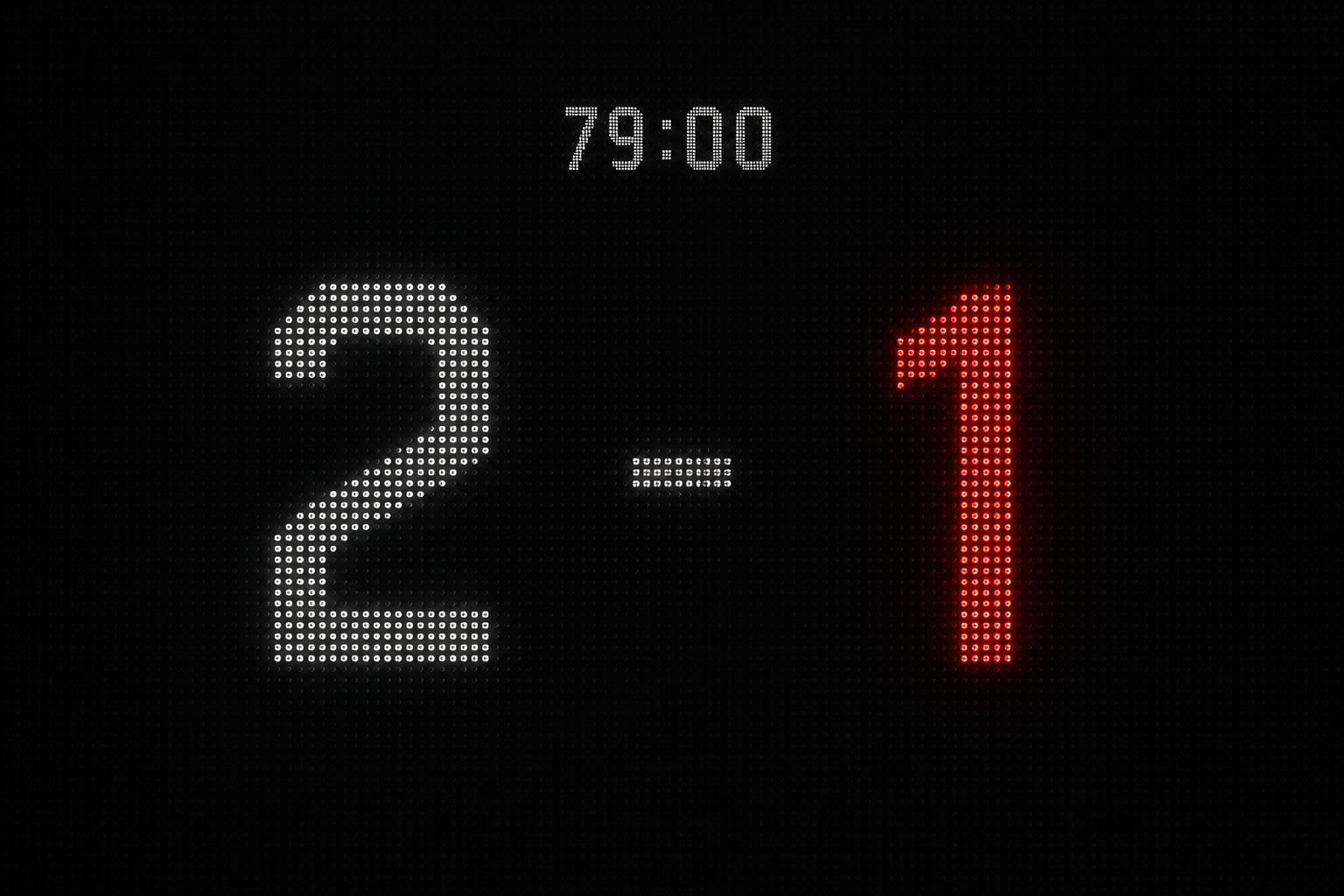
The World Cup handed us this whole essay in one match this week. Argentina went two-nil down to Egypt in the round of sixteen and looked finished. Messi had a penalty saved. Nothing was falling. What they refused to do was stop. Watch what they actually did: they kept playing the ball into the box, kept crossing, kept making the actions that produce goals, long after those actions had stopped producing anything. Then, in the seventy-ninth minute, one finally landed: Romero, heading in a Messi cross. Two-one, and the inversion arrived on schedule. Full disclosure: I was for Egypt, so I got to feel the mechanism from the wrong side of it, in real time, as something curdled in my stomach a full ten minutes before the scoreboard confirmed it. Argentina poured forward. Messi scored four minutes later. Enzo Fernández headed the winner in stoppage time. Three-two. Highlight reels will show this as a lightning response, but for seventy-eight minutes it was repetition without reward, until the reward came. The momentum wasn't the cause of the comeback. It was the reward.
Football runs on a clock, and a deficit turns fatal on a pitch not because of the goals but because of the whistle coming up behind them. One in six, one in forty, one in two hundred and fifty: what these numbers are really counting is time running out.
Our lives have no such whistle. No ninetieth minute converts our deficit into a final result, and no rule caps how many we can pull back. Three down is not a closed door. It just feels like one from inside the panic. This is why the comeback is the only story anyone tells. Nobody recounts the match their team led from first whistle to last. No obstacle, no glory. And being down is the obstacle that's always included in the price of the ticket.
The only whistles in our lives are the ones we blow ourselves. And underneath every one of them, the only opponent on the field, is a sentence: “Nothing I do matters.” It's too global a claim, and that's its one vulnerability. A single counterexample destroys it, beautifully. One clean room. One meal kept. One ball, at last, in the right place.
You don't have to erase the deficit.
You don't have to know how the story ends. You don't even have to believe you'll come back.
You only have to score next.
Brilliant piece, Marc.
“The momentum wasn’t the cause of the comeback. It was the reward.” That line alone is worth the read.
As someone who’s worked in elite sport, I’d say this applies just as much to life as football. You don’t wait for motivation to arrive….you create it by taking the next small action.
Really enjoyed this.
well played, coach.
well played.